Frequently Asked Questions
ABOUT MELATONIN
What melatonin is
Melatonin is a naturally occurring hormone produced by the body.
It plays a central role in regulating the sleep–wake cycle.
Its release is influenced by light.
As evening approaches and light decreases, melatonin levels typically rise.
This signals to the body
that it’s time to prepare for sleep.
Melatonin doesn’t create sleep.
It helps initiate the transition into it.
What melatonin does
Melatonin contributes to the reduction of time taken to fall asleep. Its primary role is timing. It supports sleep onset by aligning the body’s internal rhythm with the desired bedtime. It is not designed to sedate or override the nervous system. It works with the body’s existing processes.
What melatonin isn’t
Melatonin is not a sleeping pill. It does not force sleep or guarantee outcomes.
It supports sleep onset. It does not replace healthy routines, light management, or consistent schedules.
Functionality
Why timing matters
Melatonin is most effective when used at the right moment.
Too early or too late, its effect can feel inconsistent.
Precision in timing – and in delivery – matters more than high dosage.
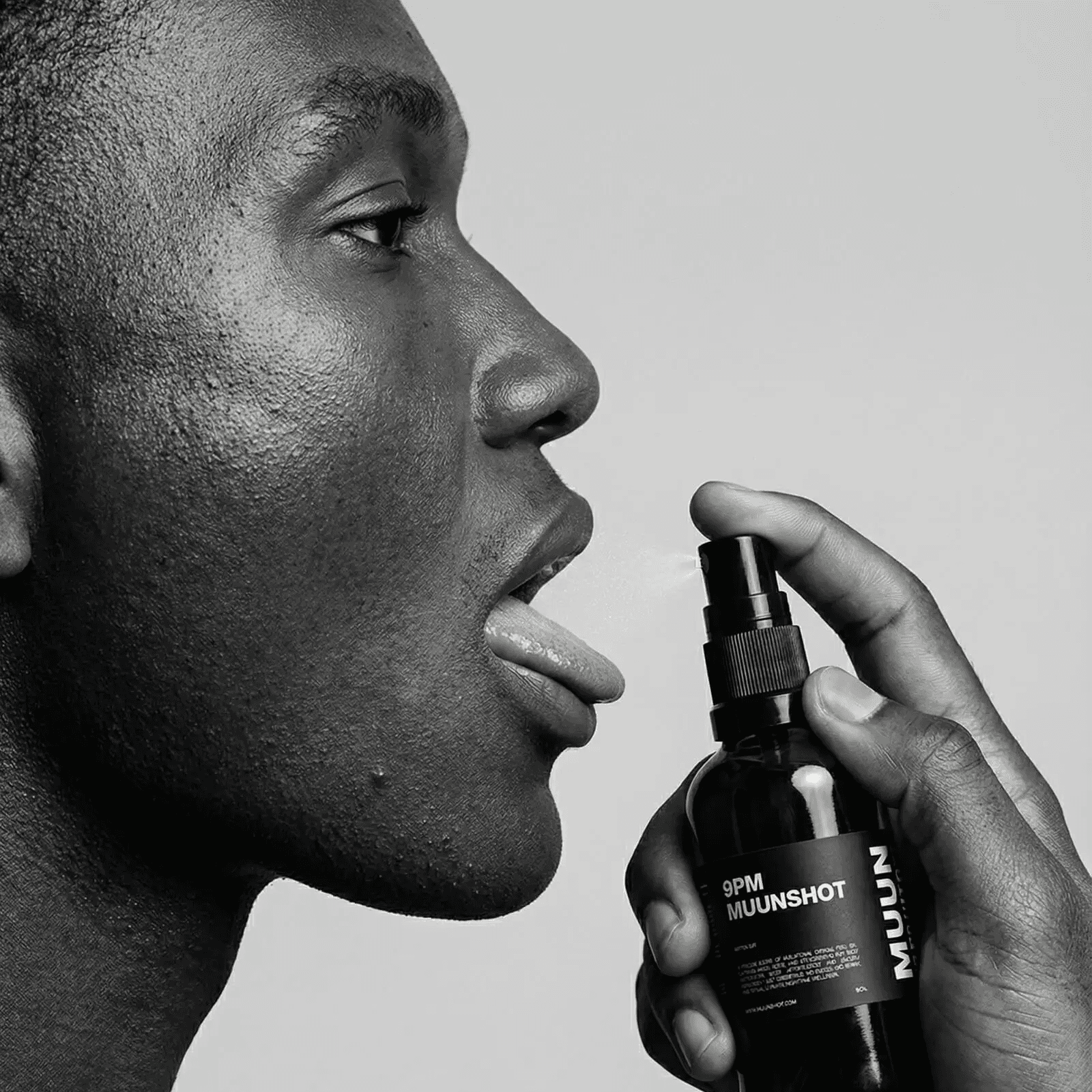
That’s why 9PM focuses on controlled uptake and measured dosing, rather than quantity.
Frequently Asked Questions
ABOUT MELATONIN
What melatonin is
Melatonin is a naturally occurring hormone produced by the body.
It plays a central role in regulating the sleep–wake cycle.
Its release is influenced by light. As evening approaches and light decreases, melatonin levels typically rise.
This signals to the body that it’s time to prepare for sleep.
Melatonin doesn’t create sleep. It helps initiate the transition into it.
What melatonin does
Melatonin contributes to the reduction of time taken to fall asleep. Its primary role is timing. It supports sleep onset by aligning the body’s internal rhythm with the desired bedtime. It is not designed to sedate or override the nervous system. It works with the body’s existing processes.
What melatonin isn’t
Melatonin is not a sleeping pill. It does not force sleep or guarantee outcomes.
It supports sleep onset. It does not replace healthy routines, light management, or consistent schedules.
Functionality
Why timing matters
Melatonin is most effective when used at the right moment.
Too early or too late, its effect can feel inconsistent.
Precision in timing – and in delivery – matters more than high dosage.
That’s why 9PM focuses on controlled uptake and measured dosing, rather than quantity.
Frequently Asked Questions
ABOUT MELATONIN
What melatonin is
Melatonin is a naturally occurring hormone produced by the body.
It plays a central role in regulating the sleep–wake cycle.
Its release is influenced by light.
As evening approaches and light decreases, melatonin levels typically rise.
This signals to the body
that it’s time to prepare for sleep.
Melatonin doesn’t create sleep.
It helps initiate the transition into it.
What melatonin does
Melatonin contributes to the reduction of time taken to fall asleep. Its primary role is timing. It supports sleep onset by aligning the body’s internal rhythm with the desired bedtime. It is not designed to sedate or override the nervous system. It works with the body’s existing processes.
What melatonin isn’t
Melatonin is not a sleeping pill. It does not force sleep or guarantee outcomes.
It supports sleep onset. It does not replace healthy routines, light management, or consistent schedules.
Functionality
Why timing matters
Melatonin is most effective when used at the right moment.
Too early or too late, its effect can feel inconsistent.
Precision in timing – and in delivery – matters more than high dosage.
That’s why 9PM focuses on controlled uptake and measured dosing, rather than quantity.




Stay in the loop
Be the first to know about new collections and exclusive offers.
Stay in the loop
Be the first to know about new collections and exclusive offers.
Stay in the loop
Be the first to know about new collections and exclusive offers.